Differentiation: Brand clarity a solve in a sea of sameness.
Case Study: Australians spent $361 billion on retail in 2023, making us the tenth-largest consumer market in the world — proof that even vast oceans and geographic isolation can’t curb our appetite for products.
Post-COVID, a privately owned Australian apparel group found itself at a crossroads. Through acquisition, it had added 13 new brands to its portfolio—many offering incremental variations of similar products. Scale had been achieved, but clarity had not.

The Challenge
With multiple banners competing for attention, the business recognised a fundamental issue: customers struggled to articulate meaningful differences between brands. Internally, this lack of distinction diluted decision-making, marketing effectiveness, and product focus. The risk was clear—without intervention, the portfolio would cannibalise itself rather than compound value.
The Strategic Reset
In 2022, the parent group launched a comprehensive brand reset, anchored in external research. The review assessed consumer perception, brand recall, and purchase intent across the full portfolio. The data confirmed what leadership suspected: the market was fragmented, and differentiation was weak. The objective shifted from broad visibility to intentional brand preference. Each brand needed a clearly defined purpose, audience, and positioning—no duplicates, no confusion.
Execution
The reset was supported by significant investment in marketing technology, integrating customer data systems to enable sharper segmentation and precision targeting. This allowed the rollout of differentiated engagement strategies and loyalty programs aligned to each brand’s identity and customer base.
Product development followed suit. Teams moved to a more insight-led model, aligning global fashion trends with the specific expectations of distinct customer segments. Each brand’s range was refined to ensure relevance, consistency, and commercial focus.
At the same time, the business accelerated its shift from a wholesale-led model to a stronger direct-to-consumer footprint. Omnichannel experience, cohesive storytelling, and design-led differentiation became central to the retail strategy.
The Outcome
The brand reset delivered clarity—internally and externally. It reduced portfolio friction, strengthened product-market alignment, and created a foundation for scalable growth.
By aligning brand architecture with customer intent, the group repositioned itself to compete with purpose, not noise—moving closer to its ambition of becoming a destination player in Australian fashion retail.
The lesson?
What began as brand dilution became a blueprint for resilience — a strategic transformation relevant to startups, legacy businesses, and nonprofits alike. In a saturated market, sameness is forgettable. Clarity is the true differentiator.
Lessons From Mosaic Brands
Mosaic Brands was once Australia’s largest specialty fashion retailer, operating more than 700 stores and managing a portfolio of household-name labels including Noni B, Millers, Katies, Rivers, Rockmans, Autograph, Crossroads, W.Lane and BeMe.
Despite its scale and national footprint, the company entered voluntary administration in October 2024 after grappling with declining sales, rising operating costs, and the ongoing ripple effects of the COVID-19 pandemic on consumer behaviour.
Attempts to restructure were unsuccessful, and by early 2025, Mosaic had collapsed entirely, closing all stores, owing over $318 million to creditors and employed more than 2,800 staff across Australia and New Zealand.
When Brand Portfolios Blur: A Cautionary Tale for Retail Groups
Sadly, Mosaic’s story highlights the vulnerabilities of managing a broad multi-brand portfolio without strong brand differentiation, operational clarity, or strategic adaptability.
Mosaic’s story shows even the most established and wide-reaching brands can fail if they lose relevance, blur their identity, or struggle to keep pace with shifting market dynamics.
But with it came a new problem: The portfolio had become disjointed. Customers recognised the products but struggled to tell the brands apart. Who sold what? Why did it matter? With too many similar offerings and no clear differentiation, the brands began cannibalising one another.”
The parent brand pre-empted this scenario and commissioned a full brand audit. The findings validated what they knew- shoppers weren’t loyal to labels, they were loyal to needs. Most started their journey with a purpose: a reliable jacket, everyday basics, something trend-led, and only then looked for a brand that matched.
Did you know?
High-quality “dupes” — and the willingness of cashed-up millennials to embrace them signals a shift toward what many call the “value quotient” — where purchasing decisions are less driven by status and more about how well a product aligns with personal priorities: cost, quality, ethics, or even convenience
Leveraging these market shifts is a key component of our brand strategy services.
.
More Reading
A strong media outcome like this certainly underscores the importance of partnership. As we explain in Green Flags When Looking for a PR Agency, choosing a PR team isn’t one-size-fits-all.
We partnered with Shemarrah Davis to help leverage her expertise. You can read about that at this link.
Want to Be Featured?
To find out how you can grow your brand please email Callista.
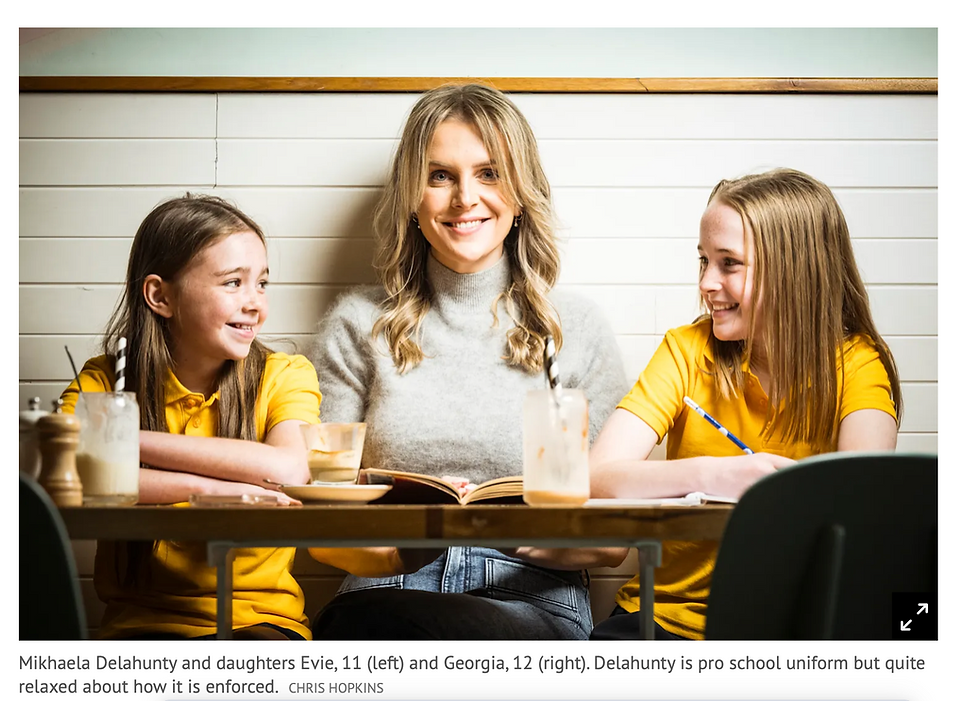
Mikhaela Delahunty is the founder of Callista Digital Communications, a Melbourne-based PR and communications consultancy specialising in public relations, brand messaging, and earned media strategy.


Comments